Respect! Selbstmord has been around for almost 30 years. Your status as a veteran of the ideologically radical underground is beyond dispute. How does nearly 30 years of experience translate into the band's current activities, the interest of labels, promoters, and listeners?
Hello! That's right, it will soon be 30 years. It's been a while – considering you've been in the metal scene for ages, I'm sure you'd agree. The band's current activities are going quite well. Not long ago, our new album was released under the EasternBlood prod. banner, which was met with positive reception and interesting feedback. Thank you to everyone who took the time to write reviews, opinions, etc. We do this for you! There's also significant distribution interest, so the material has already reached many listeners since its release.
And we keep playing, finding the time and energy to do it, so as long as it continues, the machine keeps moving forward. There's still plenty of fire and venom within us. We've currently started working on new material; a new apocalyptic work is in the works, but that's still a long way off.
What prompted you to form a new band in the late '90s? Necro had Ohtar at the time, and Diathyrron had Fullmoon. Where did the idea and need to create something completely new come from?
At some point, it became clear that Fullmoon wouldn't finish working on new material and would go on hiatus. Meanwhile, the situation in Ohtar was such that the duo's guitarist was preparing to leave the band, so his future was also uncertain. I spent a lot of time with Necro at the time. We decided not to give up and continued the work of destruction, and so, at the end of '98, Selbstmord was formed. Initially, it was a big challenge, as Necro was just starting his guitar journey, and I was somewhat accustomed to playing with Tauron. I remember Belial joining the band pretty quickly, we secured a venue, and we started playing. There was a lot of rebellion and antisocial behavior within us back then, hehe. We wanted the new team to be a reflection of that.!
How do you remember the crazy '90s? Why was it better back then? Or am I wrong? How would you compare the contemporary black metal scene to the one from the early days of Selbstmord?
I assume that when you mention the '90s, you're mainly referring to the black metal explosion and everything else related to it? It was certainly different. Everything was accompanied by powerful emotions, and nothing else mattered. A period of massive letter-writing, where this form of contact had a completely different dimension. If you wanted to listen to music, you had to acquire it. Many meetings, many valuable acquaintances, a bit of hooliganism. A lot of inspiration that will last a lifetime. That's how I remember it.
Today's scene has inevitably changed a lot, or rather, adapted. Mainly because of social media, whose vast resources are at your fingertips. It's hard to judge in any way, because it's no longer the '90s and everything has changed. Sentiments are fine, as long as they don't determine our present. Over the past thirty-plus years, so much has changed that a balance between one world and the other is necessary. It's important that the fire of those years still burns in your heart. And how do you remember the '90s? (hehe! - wonderful, crazy, to se ne vrati ;) ed. SzFHR).
Selbstmord has always been, with short breaks – Necro and Diathyrron. How did Sturmer, who has been playing with you since 2021, settle into the band? Is a trio the most optimal configuration for Selbstmord?
Yes, a trio is the most optimal. For us introverts, a fourth person in the band would have been too much. For a long time, we actively searched for a bassist, which turned out to be a big problem. A few people changed. In retrospect, I think the personality mismatch was the biggest problem.
In the past, you've collaborated with several other musicians, including Raborym and Belial. Why did your paths diverge? Do you still keep in touch with former band members?
These collaborations were sporadic. Each of them has their own projects and pursues them there. Of course, we stay in touch. There are no conflicts between us. I helped K. with several releases, we've also played a few concerts, and we've visited many interesting places around the world. I talk to Belial on the phone occasionally. We have a good relationship.
You're from Świdnica, a town in Lower Silesia. To what extent has the history of this region shaped you as people and how has it influenced what you create in Selbstmord? Could a band like yours have formed in, say, Tenerife?
Maybe because of the pitch-black beaches? Heheh, who knows?
The history of our region has had a huge impact on us and our work—that's undeniable! It's our foundation. A region rich in magical nature, filled with stories, legends, and full of mysteries. On one side, the Polish Olympus—the majestic Ślęża Mountain, where you'll encounter burial mounds and ancient cult sculptures—and on the other, a sinister fog hovering over the gloomy forests of the Owl Mountains, the oldest range in the Sudetes and one of their greatest mysteries—the "Riese" project. A region where Polish, Czech, and German influences intertwine. The birthplace of Baron von Richtchofen. It's life in a town untouched by World War II, where German inscriptions still peek through the old paint.!
Selbstmord's discography consists of over a dozen releases, including six full-length albums. Which of your releases do you value most, which ones do you most often return to?
That's a difficult question, as it's difficult for us to evaluate our own achievements, and I know we're no exception. You also need to be aware that behind the heavy, black curtain of hatred, contempt, and all the expression we want to convey in music, there's also humility.
As performers, we don't often revisit our music, as throughout the entire process of creating it, and later during recording, repeated listening sessions, etc., we encounter an excessive amount of it. Therefore, after the production, we want to rest or start creating something new. We regret not being able to look at it through the eyes of the listener, and we can only hope that it resonates with them, that what we've done won't be wasted, and that the album won't be shelved after the first listen.
Each one is different, though they share a common denominator in the form of their playing style or Necro's often controversial vocals. Each represents a different period in life, each has different inspirations. I think "Spectre of Hate," for example, is the most sentimental album for me, considering it's the first LP we made as a duo, and the period of its creation coincided with the greatest madness and greatest rebellion in our career. In my opinion, "No Forgiveness" is a very valuable album. I wasn't involved in its production, but I really like its final sound, which was greatly influenced by M. Żentara.
"Dawn of a New Era" is the album that sold the most, which only proves that it was well-received. "Radical Declaration" definitely needs more time... In summary, with the last two albums, we really wanted to return to our roots, and this is the path we want to follow in the future.
Selbstmord doesn't shy away from splits, having released joint releases with Antisemitex, Legacy of Blood, and the compilation album Hail Pagan Europe featuring Gontyna Kry, Ohtar, Katax, and Saltus. They're in select company, so what criteria must X meet to be included on a split with Selbstmord?
It's only two splits and probably three compilation appearances. Considering 30 years of existence, that's not much. There are no criteria that a band has to meet; we simply don't favor split releases. I think we work from album to album.
Selbstmord's latest album, "Mass Murder Elite," was released in February of this year. Some time has passed since its release. What has been the listeners' reaction to this material? Do they like the album, and what are its sales figures? I really liked this album – fast, uncompromising, very interesting compositionally, with a perfect sound and presentation. Very Selbstmord-esque. Congratulations!
Uncompromising, we really like that word, hehe.
Thank you! The response has been very positive. We're especially pleased that listeners and reviewers are paying attention to the things we wanted from the very beginning. Because if, when you set out to create a new album, you say to yourself, "It's supposed to be a powerful beatdown," and then in the reviews, people write about beatdowns and kicking ass, then you've probably achieved what you set out to do. That's very encouraging.
The deadly music that fills your latest work is accompanied by graphic, dark, and evocative lyrics. What was the main inspiration behind their writing? What historical or literary sources served as a point of reference? Which comes first, the music or the lyrics?
In our case, the music comes first, then we put it into words. The lyrics on the latest album tell a brief history of our region. The main inspiration is the mystical atmosphere of events, referring to the dark period of visionary "wunderwaffe" plans, mysterious technologies, black tunnels of death, and the entire machinery of violence associated with it.
On "Mass Murder Elite," you included eight songs, yet the booklet only contains three lyrics: "Eulengebirge," "Underground Bell," and "Clouds of Pungent Smoke." Why not all of them, and why these ones?
This is a result of the minimalism we wanted to incorporate into this album. It was similar on "WarSign." In both cases, we decided to include only the three most important lyrics for each of us. Some people don't include lyrics at all. We included three.
What's it like working on such emotionally intense lyrics? Is it a spontaneous or more deliberate process?
I admit that lyrics are always a big challenge. None of us are natural lyricists, and it doesn't come easily to us. It requires inspiration and often that one special moment. They're never the work of a single author. We often draw on other people's lyrics. They should contain a lot of hate and negative emotion; those are the only criteria.
The word "Eulengebirge" sounds like the name of a place. Is it a real location, or perhaps a figment of literary imagination?
Eulengebirge means "Owl Mountains" and is a real location. It is the oldest range in the Sudetes. The title and lyrics fit well with the album's concept.
"Cosmic energy, ring the bell!" Is this a direct reference to the mystical, supernatural energy of vril and the legendary Die Glocke? I'd like to take this opportunity to ask about the Riese complex: conspiracy theory or hard historical truth? How do you view this issue?
Right to the point. On the new album, we constantly touch on this topic. Since we live very close to the "Riese" object, we have been there many times. It's impossible to ignore the literature on the subject, initially very sparse. It's clear that the topic has fired people's imaginations for years and generated new fascinations. It's difficult to determine the purpose of this object, even though there is a lot of physical evidence. Too many assumptions, too little key information. The complex operates as a mystery, and perhaps it should remain that way.!
The images of smoke, fire, and silence in "Clouds of Pungent Smoke" are very physical, even tangible. Did you want the listener to "feel" these scenes? What role does the direct reference to Gross-Rosen play?
This is another dark spot on the map of our area, and we wanted to devote attention to it. To this day, it's a place with a palpable atmosphere of death, filled with silence. Situated in an idyllic, rural setting, amid granite rocks and dense forests, it creates a certain paradox when juxtaposed with the suffering that lies dormant there. The use of "one-way tracks" in the lyrics leaves no doubt. If the listener is able to feel the atmosphere conveyed in the music and lyrics of this piece, it gives us great satisfaction.
The album booklet doesn't offer any photos or lineup information. Why? The previous album, "Warsign," was accompanied by a fantastic, very "classic" photoshoot, so have there been any changes to your image?
No, we're still just as hideous. However, you should know that such a spontaneous and short photoshoot for MME took place, but we collectively began to doubt the point of including photos for this album. The lineup hasn't changed for a while, so we didn't feel the need to document it here either. It's just a whim, I don't know how to explain it. It probably stems from the aforementioned introversion and a desire for minimalism in publishing, at the expense of focusing on the music itself. Out of respect for the people who listen to us, we always try to give our all, to offer music, feelings, and today even sentiments. We don't care about a beautifully packaged product with poor music behind it. At this point, I'd like to thank the graphic designer for his excellent understanding of our intentions.
On "No Forgiveness," your 2012 album, you played a Fullmoon cover. Is this a one-off, or will there be more covers? Do you ever play songs by other bands during rehearsals?
I'm referring to the song "The Witching Gathering," which was supposed to open Fullmoon's debut album. It was Necro's idea, arranging it somewhat in his own style, to commemorate this unreleased track and protect it from oblivion. Of course, it's a one-off. We don't plan to play covers, nor do we play them during rehearsals.
Each full-length Selbstmord album has been released on a different label. Why did you change labels so often? Which collaborations do you remember most fondly, and which ones would you caution other bands against?
Some collaborations work out better, some worse. Over the years, it's true, there have been several labels. However, these changes weren't related to any conflicts or the like. Of course, there were disputes, but fortunately, these weren't multi-album contracts. Although the decision regarding the label might have been a misstep, and our level of satisfaction with the collaboration was poor, after the release, we parted ways and were free to work with whomever we chose. Sometimes, the decision to change labels was dictated by current contacts, affinities, or alliances… I have very fond memories of working with my last label, Out of the Dungeon from Finland (hail Petri!).
"Mass Murder Elite" was released by EasternBlood, owned by Sturmer. It seems you have everything under control now and there's no need to make any compromises, am I right? Is this the best solution for your band? Will vinyl, cassettes, or dedicated merch be available in addition to the CD version?
Yes, I believe this is currently a very good solution for the band and its other projects. Referring to the disputes between the band and the label, sometimes the publisher claims the right to lifetime reproduction of the material, even though the contract was for a specific number of copies. Or the label's distribution was such that customers waited six months or more for their copies to be delivered. Unacceptable!!! Some people know what I'm talking about, by the way (hail deathrune rec.). Add to that some illegal and dishonest releases... All of this led us to decide to finally get it under control, especially focusing on the legacy of our projects like Ohtar and Fullmoon, and there are many of them in total. Some of them are more or less valuable. It's not even about compromises, because no one has ever limited us in any way. Currently, in addition to the CD version of "Mass Murder Elite," a gatefold vinyl version is also available in white and black. A cassette and t-shirt will follow soon.
Some Selbstmord material, such as "We Bring Desolation" (split with Antisemitex) or the album "No Forgiveness," released by the Spanish band Die Todesrune, is currently harder to find. Will this situation change now that you've taken matters into your own hands, and will your fans see reissues on EasternBlood, which seems like a natural step to me?
As I mentioned above, the distribution of our material by deadthrune rec. defies any standards. Therefore, many people don't own these releases, so it's quite possible they will be reissued by EasternBlood prod. For now, there are other plans.
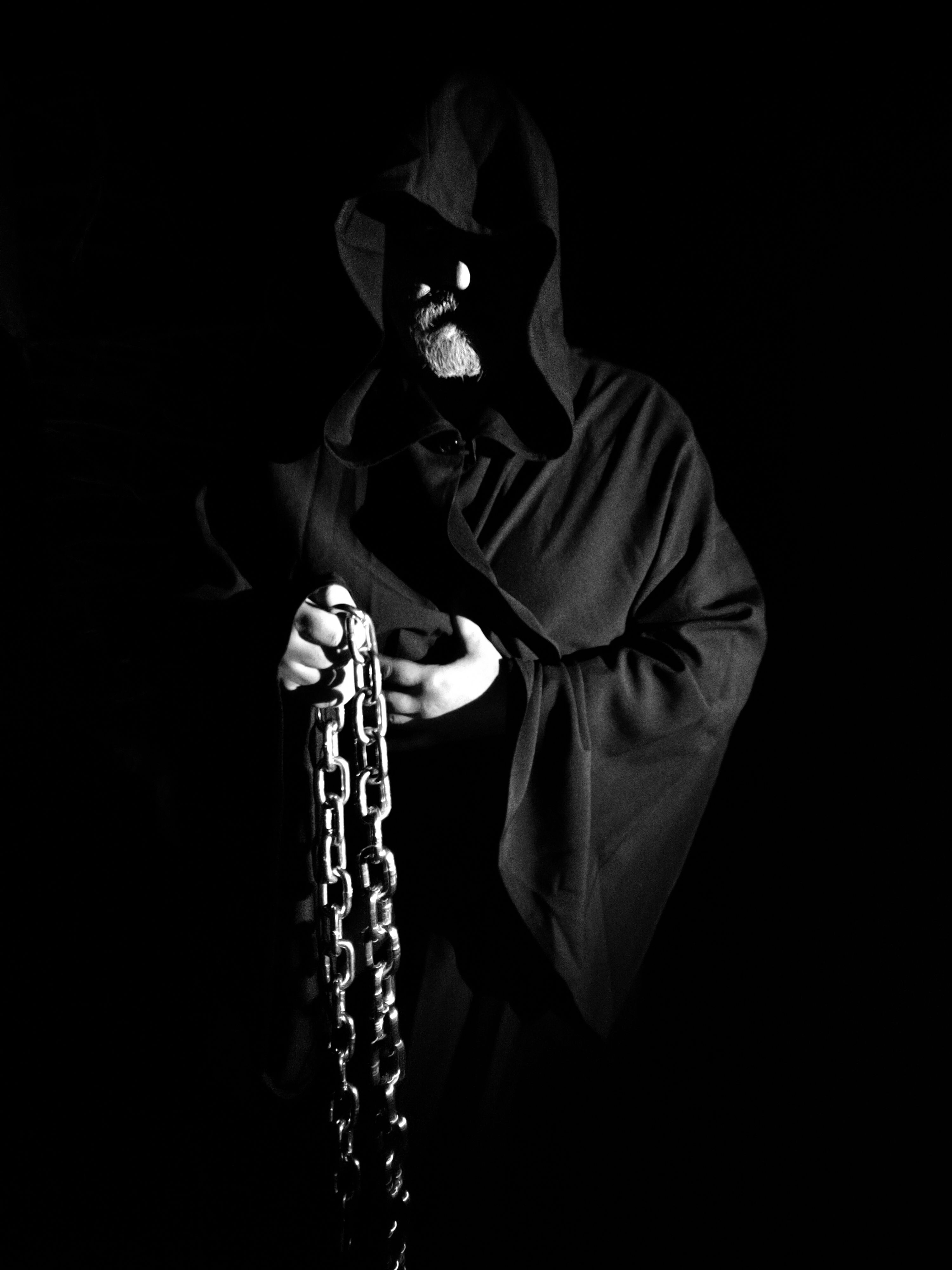
Your track "Wścieklizna" was included on the unprecedented compilation "Depths, Darkness and Death," released by the indefatigable Syrragh and his Dark Blaze Stronghold. In this way, the elite of the Polish black metal scene paid tribute to the prematurely deceased Herr Burzum, a unique figure in the full sense of the word, one that our scene has never had and never will have. The concept of this release requires no comment, but how do you assess the final result, both musically and editorially?
The publisher has put in a tremendous amount of work to commemorate Herr Burzum. Their dedication is evident. The release is polished, very comprehensive, and while not exhaustive, it does offer a closer look at the man. The track we included comes from unreleased material, recorded long before the WarSign album. We thought it would be fitting. The decision to participate in the compilation was made in a matter of seconds. I'm glad we could pay tribute to Norbert in this way and play for him in such strong company. Thanks to Syrragh and Dark Blaze Stronghold for the invitation and the opportunity to comment on this project.
You play concerts from time to time. What does a promoter/organizer have to ensure for you to accept their offer and perform live? Who would you like to play with, and who would you never play with, no matter what?
We've only played a handful of shows. We've never been a live band due to a lack of musicians for this endeavor, but the fact is, the two of us could really rock it. We also didn't have any special requirements. The truth is, we probably won't be performing live again. Maybe something will change in the future. If anything, it'll be a small club show.
How do you imagine Selbstmord, say, in 10 years? Will we see a 40th anniversary, for example? Is something like that even possible to plan?
After each Selbstmord album, Necro claims it's the last one. Then, after a while, he'll come back for rehearsals with a new song, haha. Is it even possible to plan? I don't know, we're just playing for now, we still have a lot of emotions to share.
That's all. Thank you for the interview. The last word is yours.
Thank you for an interesting conversation. Thanks to everyone who supports us. See you soon!
Szakal FHR